From Cancel Coal to Community Survival: Can Justice Bridge the Divide?
Introduction
‘The role of the courts is especially important in the context of the protection of the environment and giving effect to the principle of sustainable development.’
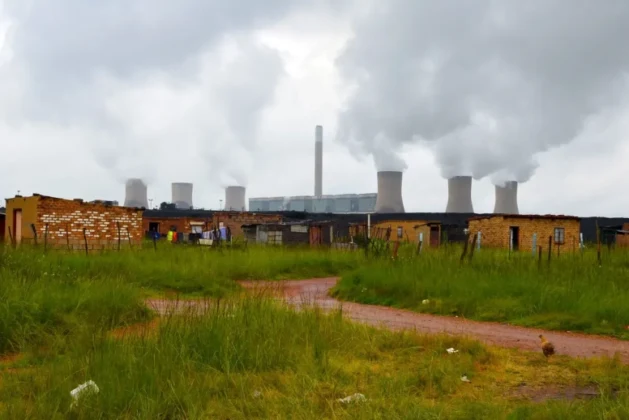
Imagine Sarah, a 17-year-old climate activist from Mpumalanga, celebrating the North Gauteng High Court’s (Court) decision to halt new coal power stations, while her father, a coalmine worker for 25 years, sits quietly at their dinner table wondering about his future. This reflects the complexity of South Africa’s latest environmental milestone; the successful youth-led constitutional challenge against plans to procure 1500 megawatts (MW) of new coal-fired power stations, popularly known as the #CancelCoal initiative. As Sarah’s and her father’s contrasting reactions, this decision raises several questions: How can South Africa, one of the world’s most coal-dependent economies, transition to a cleaner future while safeguarding livelihoods? How should courts strike a balance between long-term environmental sustainability and the immediate human needs of communities dependent on coal? This article first provides a background to the case, then critically analyses the implications of the decision on different stakeholders. Secondly, it proposes key reforms to help courts better navigate these complex disputes, where sustainable development must balance environmental protection with human needs.
Case Background
In 2021, the Centre for Environmental Rights, on behalf of the African Climate Alliance, Vukani Environmental Justice Movement, and Groundwork—organizations advocating for environmental justice—filed an application in the High Court of South Africa challenging the government’s decision to add 1,500 MW of coal power stations in its 2019 Integrated Resource Plan (IRP). The applicants argued that the IRP violated Section 24 of the Constitution, which guarantees the right to a healthy environment, and Section 28(2), which prioritizes the best interests of children. Also, they presented expert evidence highlighting renewable energy as a cleaner, more cost-effective alternative essential for reducing emissions and protecting vulnerable populations, particularly children, in line with the State’s constitutional obligations. And, upon reviewing the evidence, the court identified several deficiencies in the government’s process, including inadequate public participation and insufficient justification for deviating from earlier proposals. It emphasized that the IRP must comply with constitutional obligations under Sections 7(2) and 8(1), which require the State to uphold the Bill of Rights and act lawfully. Consequently, the failure to adequately assess environmental impacts and consider the welfare of children was deemed a violation of constitutional principles, leading the court to declare the proposal unlawful and invalid with respect to the addition of coal power stations.
Analysis: What is the problem?
The story of coal in South Africa is not merely statistical; it is deeply human. Coal remains the cornerstone of the nation’s energy sector, generating 75% of its electricity, while renewable sources account for just 7.4%. In fact, Africa’s largest coal producer and home to the world’s fifth-largest recoverable reserves, South Africa’s relationship with coal goes beyond resource extraction—it is intertwined with community survival. This heavy reliance on coal has shaped South Africa into what experts term a “coal-dependent development” country. However, the court’s recent decision highlights a critical reality: transitioning away from coal is far more complex than merely implementing policy changes. It requires addressing the lives of mining communities, power plant workers, and families who have built their futures around this industry. The challenges include:
- Economic Dependency on Coal
Firstly, coal plays a crucial role in South Africa’s economy, particularly in the Mpumalanga province, where it serves as a cornerstone of survival. It contributes 20% to the region’s economy, with municipalities like Emalahleni, Msukaligwa, Steve Tshwete, and Govan Mbeki relying on coal for up to 42% of their economic activity. And, approximately 85% of employment in Mpumalanga is tied to coal. But, behind these statistics lies a stark reality: 34% of Mpumalanga’s residents struggle to afford basic food, while 22% live below the international poverty line. Consequently, disrupting the coal value chain, which is vital to these regions, could lead to severe economic consequences.


Leave a comment